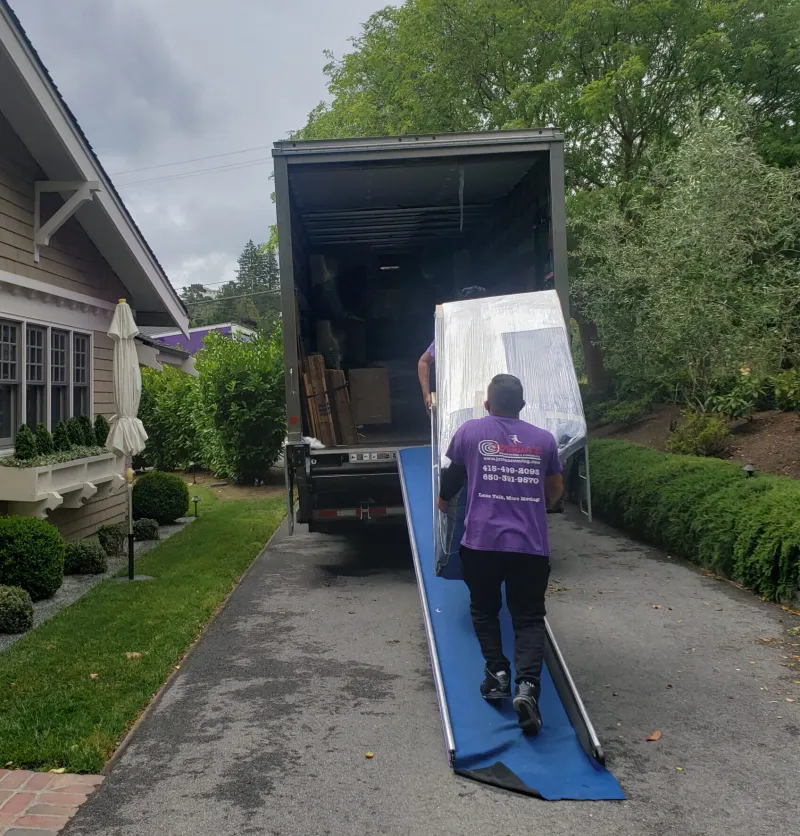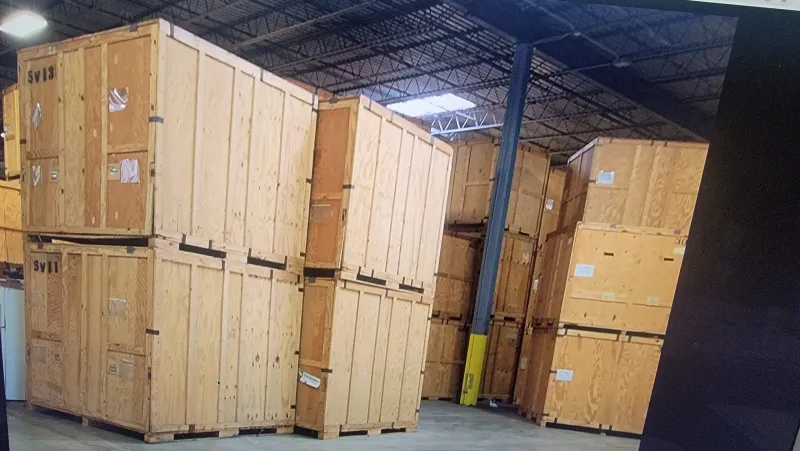
When your sale closes before your purchase, the usual answer is two moves with storage in between. We load the house on the day you hand over the keys, store your things in Joshua’s own warehouse, and deliver everything to the new place once it closes. You stay with family, in a rental or in a hotel for the gap, and keep a few bags of what you need with you.
We are Joshua’s Moving & Packing in East Palo Alto, a state-licensed mover (permit CAL-T 0191363). This guide covers how to line up the dates, what California’s rules say about storage in the middle of a move, what to keep with you, and three real jobs from our own records that went through storage. If you already have your dates, call (650) 629-2465 and tell Joshua both of them.
Your things stay with us the whole time
Storage is in Joshua’s own warehouse, not a unit rented from another company. So our own crew handles every step: we pack the house, we store your things, and we deliver them. Nobody else loads or unloads your furniture along the way, and you have one company to call about all of it.
How the two moves line up
Most gaps look like this. The dates are the part you control the least, so build the plan around them.
| Step | What happens | What to do ahead of time |
|---|---|---|
| Sale closes | You hand over the keys to the buyer | Book the move-out for this day or the day before, not after |
| Move-out day | We pack what’s left, load the truck and take it to our warehouse | Set aside the bags and boxes that travel with you |
| The gap | Your things stay in storage | Keep your closing documents, medications and valuables with you |
| Purchase closes | You get the keys to the new place | Confirm the delivery date as soon as the closing date is firm |
| Delivery day | We bring everything from our warehouse and set it up | Know which rooms the big pieces go in |
If the buyer agrees to a rent-back, you may not need storage at all. Ask your agent about it early, before the sale is final.
What California’s rules say about storage in the middle
California’s moving rules have a name for this: storage in transit. Under the state’s Maximum Rate Tariff 4, a shipment can get one-time storage at a point between where it started and where it’s going, for up to 90 days from the day it’s unloaded at storage.
The 90 days matter. Once a shipment stays in storage longer than that, the storage location is treated as the end of the move, and from then on your things fall under the warehouse’s own rules and charges. The trip from storage to your new home is then treated as a separate move. If there’s any chance your gap runs past 90 days, say so when you ask for a quote, so the plan and the paperwork fit.
The same tariff requires a written Agreement for Moving Services with a Not to Exceed Price for the services it lists. Make sure the move-out, the storage and the delivery all appear on it, so nothing about the second half of the move is left to a phone conversation.
Three real jobs that went through storage
These come from our own job records, with names and street addresses left out.
| Home | Route | What the job involved |
|---|---|---|
| 3 bedroom house | San Carlos to storage in Belmont | The whole house went into storage |
| 3 bedroom house | Palo Alto house to a Menlo Park apartment | Half the house went to storage and half to the apartment, including two marble tabletops; the building asked for a certificate of insurance |
| 1 bedroom | Palo Alto high-rise to San Francisco | Elevator building, with temporary storage in between |
The Palo Alto house shows a common version of this: part of the house goes to the new place and part goes to storage. If your next home is smaller or temporary, sort the house into “comes with us” and “goes to storage” before move day, and mark the storage boxes clearly.
What goes to storage and what stays with you
Everything you won’t need for the gap goes to storage. A few things should never leave your hands.
| Item | Where it goes | Why |
|---|---|---|
| Furniture, kitchen, books, decor, off-season clothes | Storage | You won’t need them until the new place closes |
| A week or two of clothes, chargers, kids’ and pet basics | With you | The gap can run longer than planned |
| Closing documents, passports, checkbooks | With you | You may need them at the second closing |
| Jewelry, medications, valuables | With you | Keep them in the car, never on the truck |
| Food, plants, propane and other flammables | Neither | They don’t belong in storage or on a moving truck |
When the closing date moves
Closing dates slip. When the purchase moves later, your things just stay in storage longer, which is the reason to have a gap plan in the first place. When it moves earlier, call us as soon as you know, because the delivery day has to be booked like any other move. Our guide on what to do when your move is delayed covers the rest, from where to stay to what to tell your utilities.
For realtors with clients in the gap
If you’re an agent with a seller who closes before they buy, we work with Peninsula realtors on these moves. See our realtor partner page for how referrals work.
How to plan your move through storage
- Write down both closing dates, and ask your agent whether a rent-back is possible.
- Book the move-out for the day your sale closes, or the day before.
- Decide what you’ll need during the gap and pack it separately.
- Ask whether you want us to pack the house, or just the kitchen and the fragile pieces.
- Get a written agreement that lists the move-out, the storage and the delivery.
Storage and moving from Joshua’s Moving
Joshua quotes every move himself and goes over pricing with you when you get your quote. Tell him both closing dates, the size of the home and whether the next place is temporary. See our storage services and full-service house moves for more.