Living in Palo Alto means world-class schools, one of the safest and most walkable cities in the Bay Area, and a job market anchored by Stanford and Silicon Valley. It also means some of the highest housing costs in the country: the median home now sits around $3.6 million, and a one-bedroom apartment rents for roughly $2,850 a month in 2026.
We are Joshua’s Moving & Packing, and we move families into and out of Palo Alto every week, so this guide is built on what we actually see on the ground, not recycled national statistics. Below you will find current 2026 numbers on cost of living, an honest look at safety and schools, a neighborhood-by-neighborhood breakdown, and a realistic picture of the trade-offs before you commit to a move.
Palo Alto at a Glance (2026)
| Quick Fact | 2026 Figure |
|---|---|
| Population | About 67,000 |
| Median age | 44 |
| Median household income | Over $220,000 |
| Median home value | Roughly $3.6 million |
| Average 1-bedroom rent | About $2,850/month |
| Violent crime | Roughly 66% below the national average |
| School district | Palo Alto Unified (PAUSD), among California’s top districts |
| Commute | Caltrain (2 stations), Highway 101, I-280, top-ranked bike city |
Where Is Palo Alto, California?
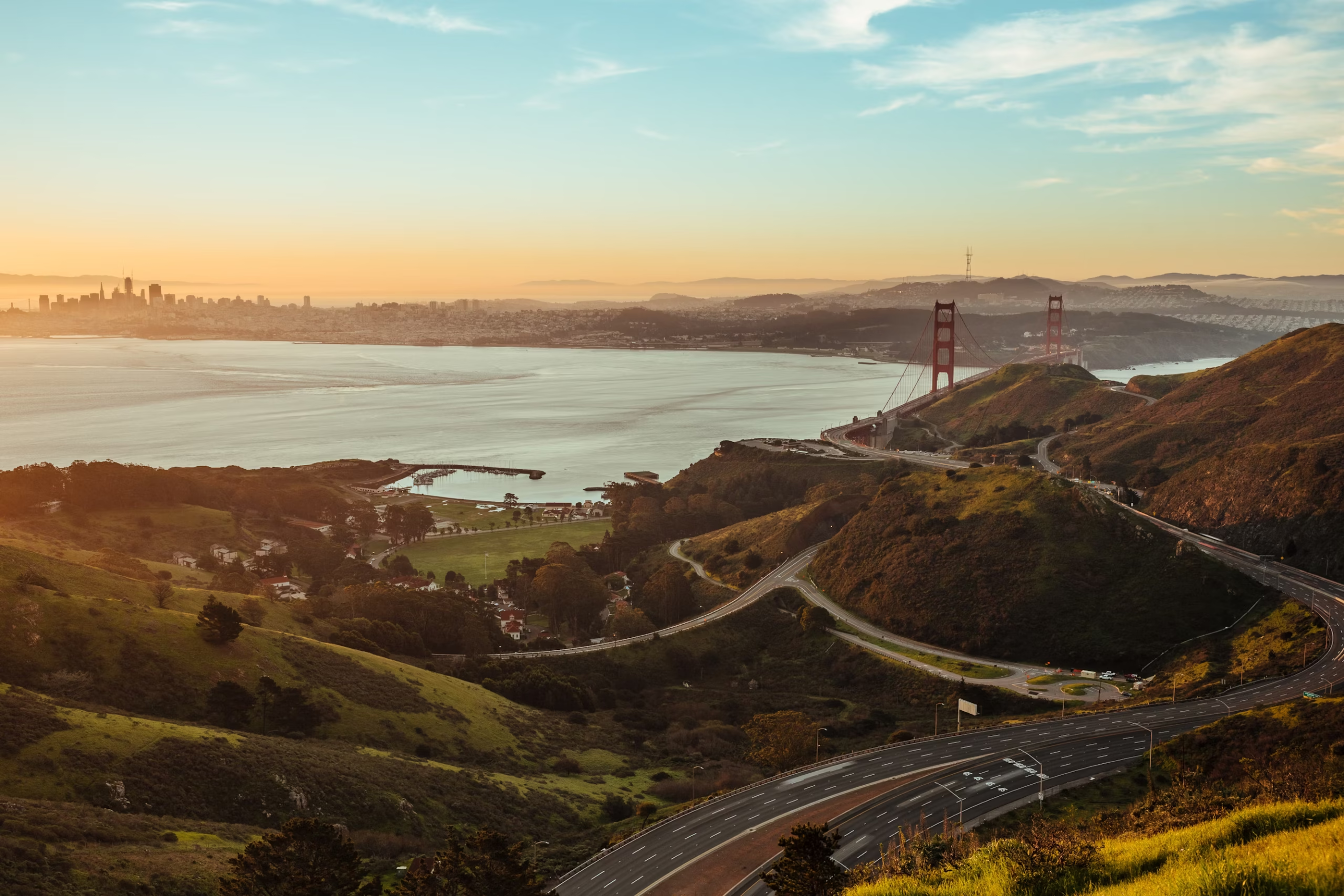
Palo Alto sits in the heart of Silicon Valley, about 35 miles south of San Francisco and 14 miles north of San Jose, wedged between Menlo Park to the north and Mountain View to the south. It borders Stanford University, Los Altos, and East Palo Alto, with Atherton and Woodside just up the road.
Often called the birthplace of Silicon Valley, the city blends academic prestige with tech-industry energy. Companies like HP were founded here, and Stanford’s campus effectively functions as the city’s western edge. Despite all that, Palo Alto still reads as a leafy college town: tree-lined streets, a walkable downtown, and neighborhoods that feel far quieter than the resumes of the people living in them.
Is Palo Alto a Good Place to Live?
Yes, if you can afford it. Palo Alto consistently ranks among the best places to live in America thanks to its schools, safety, weather, and access to high-paying jobs. The honest catch is cost: overall living expenses run roughly three times the national average, and housing is the main driver.
Here is the practical version. If your household income supports Bay Area housing, Palo Alto delivers more per dollar of stress than almost anywhere in the region: short commutes, excellent public schools that make private tuition optional, low crime, and a genuinely bikeable, park-rich layout. If you are stretching to get here, nearby cities like Mountain View, Redwood City, or San Carlos offer much of the same access at a lower (though still high) price.
Is Palo Alto Safe?
Palo Alto is one of the safest cities in the Bay Area. Violent crime runs roughly 66% below the national average, and most residents will tell you they feel comfortable walking downtown at night or letting kids bike to school, which many families here do daily.
Property crime is the main thing to watch. Like most affluent Peninsula cities, Palo Alto sees car break-ins, package theft, and occasional residential burglary, concentrated around shopping corridors and parking areas. It is still low by urban standards, but do not leave a laptop visible in a parked car near University Avenue.
A few more things worth knowing:
- Neighborhood consistency. There is no part of Palo Alto residents avoid. Crescent Park, Professorville, Old Palo Alto, and Barron Park are all quiet and family-friendly.
- Well-resourced services. The city runs its own police and fire departments, and response times are strong for a city this size.
- Don’t confuse it with East Palo Alto. East Palo Alto is a separate city across Highway 101 with its own government and its own (much improved) safety story. Crime statistics for one do not apply to the other.
Cost of Living in Palo Alto (2026)
Palo Alto is expensive even by Bay Area standards. Housing costs are the overwhelming factor, but groceries, services, and childcare all run well above national norms. Here is what the numbers actually look like in 2026:
| Expense | Typical 2026 Cost |
|---|---|
| Median home value | ~$3.6 million |
| Studio apartment | ~$2,300/month |
| 1-bedroom apartment | ~$2,850/month |
| 2-bedroom apartment | ~$3,400/month |
| 3-bedroom apartment | ~$3,900+/month |
| Single-family home rental | $6,000 to $10,000+/month |
| Utilities (electric, water, internet, garbage) | $300 to $400/month |
| Groceries | About 25% above the national average |
Two details most cost guides miss:
- Renting is the value play right now. A 2026 study covered by Palo Alto Online found that buying the median Palo Alto home costs about 5.6 times more per month than renting a comparable one. That is one of the widest buy-versus-rent gaps in the country, and it is why plenty of high-earning households here rent by choice.
- The city runs its own utilities. Palo Alto is the only city in California that operates its own full suite of utilities (electric, gas, water, sewer), and rates are generally competitive with PG&E territory next door.
One more budget line people forget: the move itself. Local moves here typically run $500 to $4,500 depending on home size and access. We break down real hourly rates, costs by home size, and the California double drive time rule in our 2026 Palo Alto moving cost guide.
Palo Alto Neighborhoods to Know
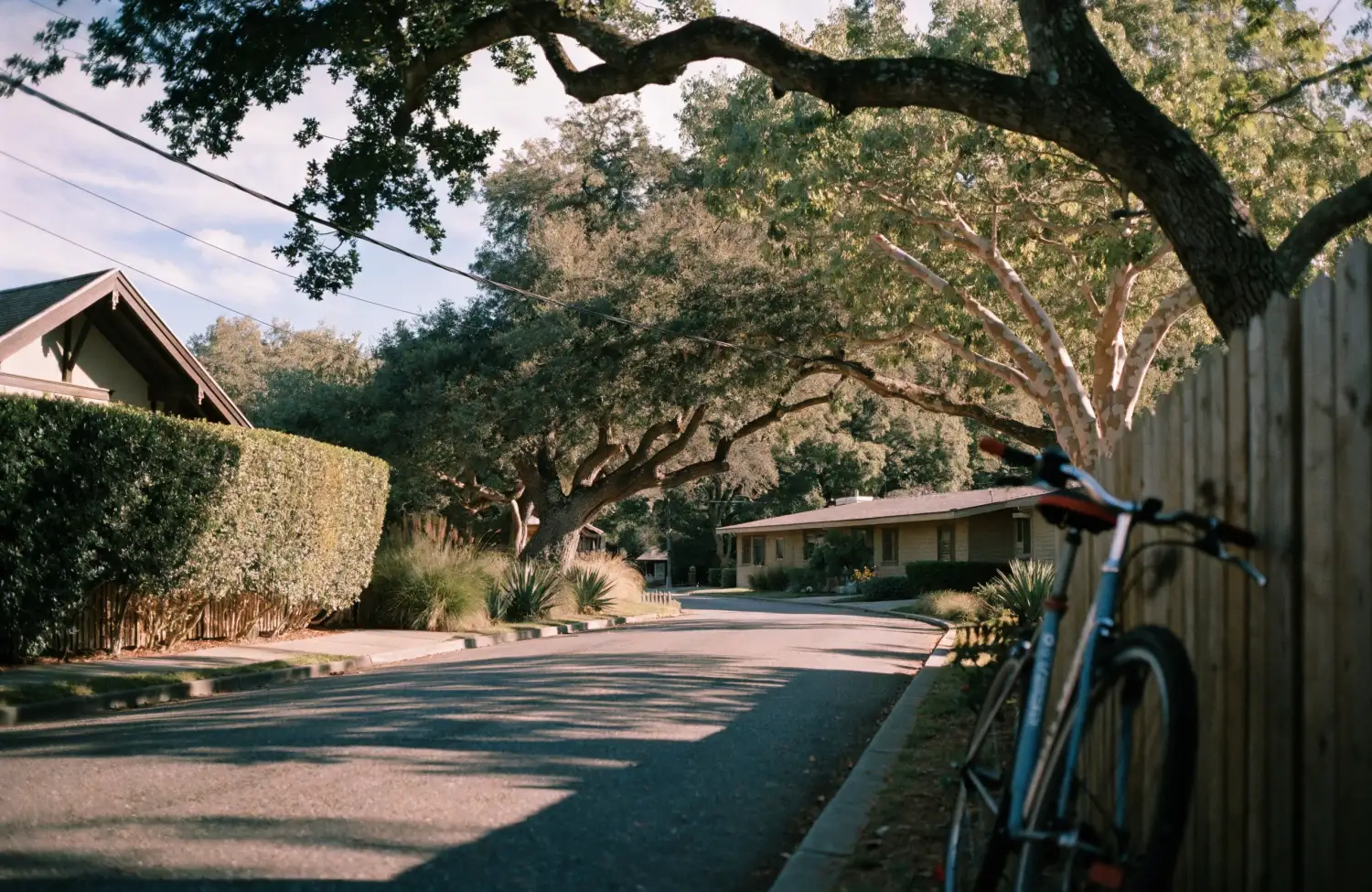
Palo Alto is a collection of distinct neighborhoods, and where you land changes your daily life more than most people expect:
- Old Palo Alto. The city’s most prestigious address: grand homes, heritage trees, and a who’s who of tech history. Quiet, central, and priced accordingly.
- Crescent Park & Professorville. Historic, leafy, and walkable to downtown. Professorville’s early-1900s homes are a designated historic district.
- Downtown / University South. Condos and apartments steps from University Avenue’s restaurants and Caltrain. The most urban lifestyle Palo Alto offers.
- Midtown. The practical family favorite: ranch homes, a small shopping center, good schools, and quick access to both 101 and Foothill Expressway.
- Barron Park. Semi-rural charm on the south end, complete with a beloved pair of donkeys in a public pasture. More relaxed lots and a strong neighborhood identity.
- College Terrace. Compact streets named after universities, tucked against Stanford. Popular with academics and grad students.
- Palo Verde & Fairmeadow. Home to many of the city’s Eichler homes, the glass-walled mid-century houses Palo Alto is famous for. (We move a lot of Eichler households, and those atriums demand careful crews.)
Palo Alto Schools
Schools are the number one reason families absorb Palo Alto’s housing costs. The Palo Alto Unified School District (PAUSD) consistently ranks among the top districts in California, with strong academics, arts, and college outcomes.
The current lineup:
- High schools: Palo Alto High School (“Paly”) and Henry M. Gunn High School, both regularly ranked among the state’s best public high schools.
- Middle schools: Greene, JLS (Jane Lathrop Stanford), and Fletcher.
- Elementary schools: Twelve neighborhood schools, including Walter Hays, Addison, Duveneck, and the choice program at Ohlone.
Private options include Castilleja School, Keys School, and Silicon Valley International School, and Stanford’s presence adds lectures, camps, and mentorship programs most suburbs simply do not have. If schools are driving your move, start with our guide to choosing the best schools in Palo Alto, because school boundaries should shape your house hunt from day one.
Jobs and the Palo Alto Economy
Palo Alto’s job market is among the strongest in the country, anchored by:
- Stanford University and Stanford Health Care, the city’s largest employers
- Tesla’s engineering headquarters
- HP and SAP Labs
- The venture capital corridor along Sand Hill Road
- A dense layer of startups, law firms, and research labs downtown and in Stanford Research Park
Median household income tops $220,000, and remote and hybrid work are standard across the tech sector. Even if your job is in San Francisco or San Jose, Palo Alto’s mid-Peninsula position makes it one of the few towns where a commute in either direction stays reasonable.
Getting Around: Transit, Biking, and Walkability
Palo Alto is one of the easiest Bay Area cities to live in without fighting traffic daily:
- Caltrain. Two stations (University Avenue and California Avenue) with electrified service running frequently up to San Francisco and down to San Jose.
- Driving. Highway 101 and I-280 bracket the city, with Oregon Expressway and Page Mill Road connecting them.
- Biking. Palo Alto is routinely ranked among the most bike-friendly cities in America. Dedicated bike boulevards mean around 7% of residents commute by bike, and swarms of students ride to school every morning.
- Walkability. Downtown and the California Avenue district are genuinely walkable, with restaurants, groceries, and Caltrain in easy reach. The residential neighborhoods are quiet and stroller-friendly but built around short drives or bike rides for errands.
Palo Alto Weather
Palo Alto enjoys a Mediterranean climate that is hard to beat: summer highs around 78°F, mild winters that rarely dip below 45°F during the day, and about 250 sunny days a year. Rain concentrates between November and March, and the city largely avoids the summer fog that blankets San Francisco. The payoff is year-round outdoor living, which is exactly how residents treat it.
Things to Do in Palo Alto
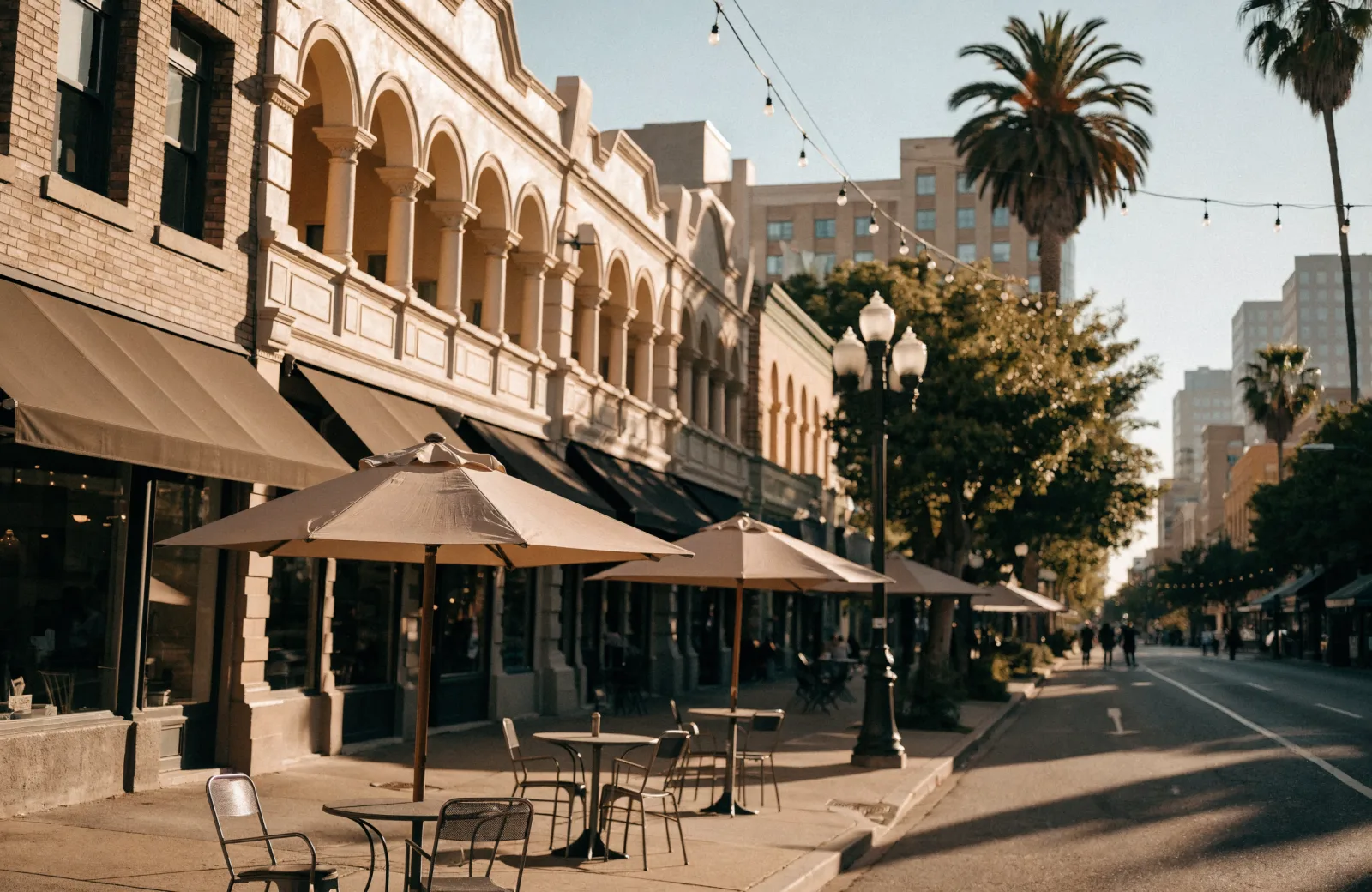
For a city of 67,000, Palo Alto punches far above its weight:
- Stanford University. The Cantor Arts Center, the Dish Loop trail’s panoramic hike, football Saturdays, and free public lectures.
- Downtown and California Avenue. Boutique shopping, a Sunday farmers market, and two of the Peninsula’s best restaurant rows.
- Outdoor escapes. The Baylands Nature Preserve offers miles of flat waterfront trails and some of the best birdwatching on the West Coast. Foothills Nature Preserve (formerly Foothills Park, now open to everyone) and Arastradero Preserve cover the hill side of town.
- Community events. Art festivals, the May Fete Parade (running for over a century), and year-round Stanford performances.
Where to Eat in Palo Alto
Palo Alto’s dining scene ranges from quick lunch counters to special-occasion rooms:
- Evvia Estiatorio. The beloved downtown Greek institution, still one of the toughest reservations on the Peninsula.
- Oren’s Hummus. Casual Israeli fare with a cult following.
- Tamarine. Upscale modern Vietnamese on University Avenue.
- Coupa Café. The unofficial conference room of Silicon Valley, where startup pitches happen over Venezuelan coffee.
California Avenue adds a second full restaurant row, and nearly every cuisine in the Bay Area is represented within a ten-minute drive.
Pros and Cons of Living in Palo Alto
Pros
- Top-ranked public schools that save many families $40,000+ per child in private tuition
- Very low violent crime and clean, well-kept public spaces
- Exceptional weather and easy access to both the bay and the foothills
- Short commutes to Silicon Valley’s biggest employers
- Walkable downtown, strong bike infrastructure, and two Caltrain stations
Cons
- Housing costs that exclude most buyers: $3.6 million median home, high rents
- Everyday expenses (groceries, dining, services) well above national norms
- Competitive, achievement-oriented culture that is not for everyone
- Limited nightlife compared to San Francisco
- Property crime like car break-ins, the trade-off of any affluent shopping district
Moving to Palo Alto? Here’s How to Do It Right
A few lessons from the hundreds of Palo Alto moves we handle:
- Declutter before you price your move. Movers here charge by the hour, so every box you do not move is money saved. If you are clearing out a garage or downsizing, our junk removal and hauling service can take the donation runs and dump trips off your plate in one visit.
- Pick your moving date strategically. Mid-month weekdays cost meaningfully less than end-of-month weekends. We explain exactly why in our guide to the cheapest day to hire movers.
- Plan for access quirks. Downtown condos need elevator reservations and certificates of insurance. Eichlers need floor protection and careful routing around glass. Tell your mover what they are walking into and the quote gets more accurate.
- Book two to four weeks out. Summer and end-of-month dates fill first, and Palo Alto’s moving calendar follows the school year.
When you are ready, our local crew at Joshua’s Moving in Palo Alto handles everything from studio apartments near Caltrain to full Old Palo Alto estates, with licensed, insured crews and no hidden fees.
Get Your Free Estimate · Call (650) 629-2465
Frequently Asked Questions
Is Palo Alto safe at night? Yes. Downtown Palo Alto and residential neighborhoods are considered safe at night, with violent crime well below the national average. The most common issues are car break-ins and package theft, so use normal city precautions with valuables.
How much money do you need to live in Palo Alto? As a rough rule, a single renter needs about $115,000 a year to afford a one-bedroom comfortably, and a family renting a house needs $250,000 or more. Buying the median $3.6 million home generally requires a household income north of $600,000 plus a large down payment.
Is Palo Alto walkable? The downtown and California Avenue districts are highly walkable, and the city as a whole is one of the most bike-friendly in the United States. Most residential neighborhoods are quiet and pedestrian-safe but rely on short bike rides or drives for errands.
Is Palo Alto a good place to raise a family? Yes. Palo Alto Unified is one of California’s top school districts, violent crime is low, and the city is dense with parks, libraries, and youth programs. The trade-off is cost: most families spend more on housing here than they would nearly anywhere else in the country.
Why is Palo Alto so expensive? Demand and geography. The city sits at the center of Silicon Valley’s job market, feeds a top-ranked school district, and is nearly built out, with strict limits on new housing. Extremely high incomes chasing a fixed housing supply keep prices climbing.