Overview
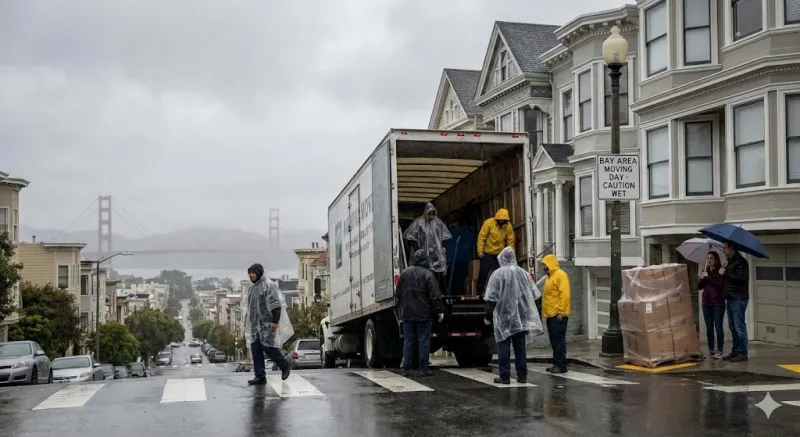
Moving presents inherent challenges that intensify during rainy conditions. The Bay Area experiences rain from late fall through early spring, creating unpredictable circumstances for relocations throughout the Peninsula and surrounding regions.
Bay Area Rain Patterns That Affect Moving Day
A Distinct Wet Season
November through March brings the Bay Area’s rainy season, characterized by:
- Frequent light-to-moderate rainfall
- Occasional heavy storms
- Foggy, damp mornings
- Shortened daylight hours
Weather patterns arrive in waves with variable clear breaks between them, causing rapid shifting conditions on move days.
Microclimates Matter
Local geography significantly influences rainfall intensity:
- Coastal areas (Pacifica, Daly City): Heavier, more frequent storms
- Peninsula cities (Redwood City): Clearer skies with sudden showers
- Hillside neighborhoods (Belmont, Los Altos Hills): Slick or muddy conditions
Even dry conditions in Palo Alto may coincide with rain in San Bruno or San Mateo along the same route.
How Rain Disrupts Moving Day Logistics
1. Slippery Surfaces Make Loading Risky
Wet conditions on walkways, driveways, and stairwells create hazards including slips, falls, dropped boxes, and water intrusion into homes. Smooth concrete, stairs, and tile entryways become especially dangerous.
2. Increased Risk of Damage to Belongings
Moisture threatens:
- Cardboard boxes
- Wood furniture
- Mattresses
- Electronics
- Artwork
- Books and documents
Brief moisture exposure warps wood and destroys fragile items.
3. Traffic Delays During Storms
Rain consistently slows major Bay Area corridors:
- Highway 101: Standing water in right lanes
- I-280: Reduced visibility over hills
- Highway 92: Heavier winds and fog
- El Camino Real: Congestion near major intersections
Accident frequency increases during storms, extending total move times.
4. Parking Becomes More Complicated
Rain creates:
- Increased street parking from other vehicles
- Limited visibility for truck backing
- Difficult maneuvering in narrow residential streets
- Parking overflow near apartments and condos
Denser areas like downtown Mountain View and San Mateo require secured truck positioning.
5. Slower Loading and Unloading
Movers must:
- Wrap items more carefully
- Place floor protection in both homes
- Use coverings for truck ramps
- Move slower to prevent slips
These precautions add time but ensure safety and protection.
6. Potential Rescheduling
While most local movers work in rain, heavy storms may cause:
- Delayed start times
- Adjusted loading strategies
- In rare cases, move postponement
Flexibility proves essential when storms approach.
Preparing for a Rainy Day Move in the Bay Area
1. Protect Your Belongings With Waterproof Materials
Essential protective items include:
- Plastic shrink wrap for furniture
- Mattress bags
- Plastic bins for sensitive belongings
- Waterproof or reinforced box tape
- Garbage bags as extra layering for clothes or linens
Wrapping cardboard box tops and bottoms in plastic sheeting provides additional protection.
2. Prepare Both Homes for Wet-Weather Loading
Before movers arrive:
- Lay down towels or flattened cardboard at entrance points
- Use floor runners or non-slip mats
- Clear leaves from walkways
- Turn on exterior lighting for dark, stormy hours
- Identify the driest, safest route from door to truck
This reduces slip risks and prevents water from spreading through homes.
3. Plan for Extra Time
Rainy moves invariably take longer. Build in:
- Flexible start times
- Additional travel time between homes
- Buffer time for traffic delays
Consider booking longer elevator reservation windows for building moves.
4. Secure Truck Parking Ahead of Time
In rainy weather, proximity matters significantly. When possible:
- Reserve loading zones through your city (Palo Alto, San Mateo, and Redwood City often require permits)
- Place cones or temporary signs to hold spaces
- Avoid low-hanging branches or flooded curbs
Confirm legal truck parking locations for apartment moves.
5. Pack an Essentials Kit for Wet Weather
Keep a waterproof bag containing:
- Umbrellas
- Towels
- Extra socks
- Gloves
- A change of clothes
- Important documents
- Chargers and medication
Having these items available provides comfort during wet conditions.
6. Track the Forecast Closely
While weather apps offer guidance, Bay Area storms sometimes arrive earlier or later than predicted. Check forecasts several days beforehand, then again the morning of the move. Even a few dry hours significantly improve moving efficiency.
Checklist: What to Do Before a Rainy Bay Area Move
Two–Three Days Before
- Check weather forecasts for all cities along your route
- Confirm mover rain policies
- Gather plastic wrap, tarps, and floor protectors
- Reserve parking if needed
The Day Before
- Wrap furniture and fragile items
- Move cardboard boxes away from exterior doors
- Protect rugs or carpets with plastic covering
- Pack wet-weather essentials kit
Move Day Morning
- Clear walkways of leaves or debris
- Lay towels/mats in entryways
- Turn on outdoor lighting
- Set up a “dry zone” in the home for staging items
- Ensure kids and pets stay in safe, dry areas
Why Professional Movers Make a Big Difference in the Rain
Experienced moving professionals manage rain-related risks more efficiently than DIY approaches.
Trained movers know how to:
- Wrap furniture for rain exposure
- Keep items dry during loading
- Navigate wet driveways and stairs safely
- Protect home floors from water and mud
- Adjust timing to avoid downpours
- Drive large trucks safely in wet conditions
Professional equipment includes:
- Waterproof moving blankets
- Tarps and shrink wrap
- Rubber floor runners
- Ramp covers for traction
Rain increases slip, fall, and damage risks, making professional assistance valuable for safer, less stressful moves.
Conclusion
Rain defines the Bay Area’s winter months but need not derail relocations. Understanding weather impacts, preparing homes, protecting belongings, and planning ahead transforms challenging weather days into manageable experiences. With proper approach and experienced moving teams, belongings remain dry, homes stay protected, and moves proceed smoothly even during the wettest seasons.