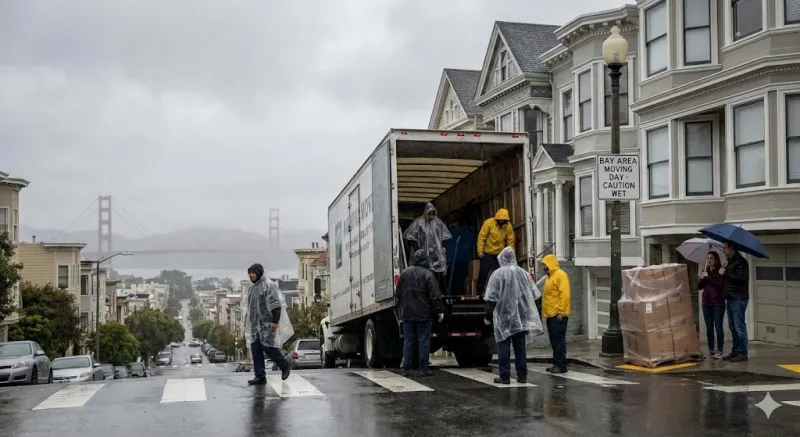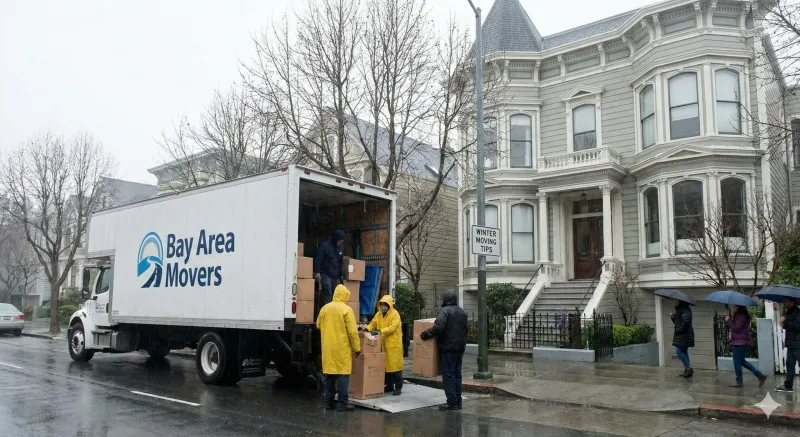
Bay Area winter moves present a unique scenario compared to other U.S. regions. Mild temperatures in the mid-50s to low-60s combine with rainy conditions to create both opportunities and challenges for relocating residents.
Key Advantages of Winter Moving
Lower Market Demand
Winter is the slow season for most local movers, which means better availability and scheduling flexibility across the Peninsula and surrounding communities.
Potential Cost Savings
Reduced competition may yield more competitive pricing compared to peak seasons.
Building Access Improvements
Apartment complexes and HOAs experience lighter elevator reservation requests, making permit acquisition faster.
Comfort Factor
Cooler temperatures reduce physical strain during loading and unloading compared to summer heat waves.
Major Challenges
Weather-Related Risks
Rain and moisture present the primary concern, threatening cardboard boxes, upholstered items, and wooden furniture.
Limited Daylight
December sunsets occur around 4:50 p.m., creating compressed moving windows and visibility challenges during unloading.
Traffic Disruptions
While snow isn’t a factor, winter rainstorms slow traffic on Highway 101, I-280, and local roads.
Essential Preparation Strategies
- Use plastic wrap and waterproof bin liners for moisture protection
- Begin moves early (7:00 a.m. to 2:30 p.m.) to maximize daylight
- Secure parking permits and HOA approvals well in advance
- Prepare weather-resistant essentials boxes
- Confirm storm forecasts and maintain scheduling flexibility
- Select movers experienced with Bay Area winter conditions
Location-Specific Considerations
Palo Alto: Watch for school traffic; verify truck clearance on narrow driveways
San Mateo: Downtown parking congestion worsens on rainy weekdays
Redwood City: Windy conditions require secure item fastening
Mountain View: Avoid lunch hour congestion before noon unloading
Professional movers equipped with waterproof materials and local knowledge can significantly reduce weather-related complications during winter relocations.